
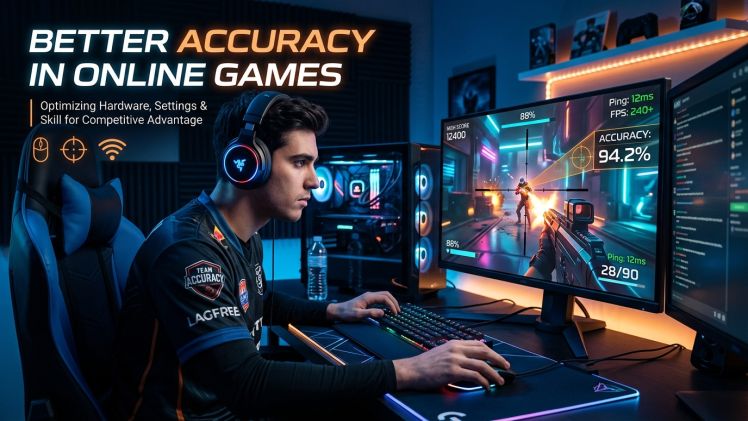
Accuracy is one of the most valuable skills in online gaming because precise decisions, movements, and actions can determine whether a player succeeds or struggles. Players who understand their controls, optimize their settings, and stay focused can perform more reliably in demanding matches. For players exploring gaming environments, agb99 can also serve as a useful point of reference for building better habits.
Understand Your Controls
The first step toward better accuracy is becoming completely comfortable with your controls. Every button, key, sensitivity option, and movement command should feel familiar. Avoid changing your control layout constantly because frequent adjustments can interfere with muscle memory. Once controls become automatic, you can focus more on opponents, objectives, positioning, and timing instead of remembering which button performs each action.
Adjust Sensitivity Carefully
Sensitivity settings can greatly affect accuracy. Extremely high sensitivity may allow quick movements but can make precise aiming difficult. Very low sensitivity can improve control while making it harder to react quickly. Test different values in a practice environment and make small adjustments rather than changing everything at once. Once you discover a comfortable setting, keep it consistent so your hands can develop reliable movement patterns.
Practice With Purpose
Random gameplay can provide experience, but focused practice usually produces better results. Create short training sessions dedicated to specific weaknesses. Work on tracking moving targets, controlling recoil, making accurate passes, timing attacks, or quickly selecting targets. Concentrate on quality rather than simply completing many matches. Ten minutes of deliberate practice can be more productive than hours of unfocused play.
Improve Your Positioning
Accuracy is not only about mechanical skill. Good positioning creates easier opportunities for accurate actions. In competitive games, avoid unnecessary exposure and choose locations that give you enough time to react. In strategy games, think about distance, terrain, resources, and likely enemy movements. In team games, coordinate with teammates instead of attempting difficult actions alone. Better positioning reduces pressure and gives you more control over each decision.
Reduce Distractions
Concentration directly influences precision. Notifications, background applications, loud environments, and unnecessary conversations can break your focus at critical moments. Before starting an important session, close irrelevant programs and silence distracting alerts. Short breaks can also prevent mental fatigue. When your attention remains steady, you are more likely to notice subtle movements and respond accurately.
Maintain Stable Performance
Technical consistency matters because unpredictable performance can make accurate play difficult. Keep your game updated, use a reliable internet connection, and close applications that consume unnecessary system resources. If latency becomes unstable, investigate your network or device before blaming your gameplay. Smooth performance does not automatically create accuracy, but it removes technical obstacles that can interfere with precise actions.
Study Your Mistakes
Improvement becomes easier when you analyse unsuccessful moments. After a match, identify situations where your accuracy declined. Did you rush an important action? Did you move too much while aiming? Were you poorly positioned? Did fatigue affect your concentration? Reviewing mistakes without frustration helps you recognise patterns. Track recurring problems and practice those areas deliberately. Over time, mistakes can become useful information instead of repeated setbacks.
Develop Consistent Habits
Consistency is more important than occasional excellent performances. Build a simple routine that includes warm-up exercises, focused matches, breaks, and review. Use the same equipment and settings whenever practical. Avoid practising for extremely long periods when your concentration has already declined. Regular sessions help reinforce muscle memory and decision-making patterns. Gradual improvement is usually more sustainable than trying to transform your performance overnight.
A clear routine also makes progress easier to measure, because players can compare performance across sessions and identify which adjustments genuinely improve precision, confidence, and decision-making under real pressure.
Conclusion
Better accuracy comes from combining mechanical control, thoughtful positioning, concentration, technical stability, and purposeful practice. Players should experiment carefully with settings, learn from mistakes, and develop routines that encourage consistent performance. Most importantly, treat accuracy as a skill that improves through repetition and reflection. With patience and disciplined practice, players can make cleaner decisions, execute actions more precisely, and become more dependable across a wide range of online games.

